







Treadmill Training Adjustment Guide: Optimize Based on Body Feedback
Treadmill Training Plan Adjustment Guide: Optimize Your Workout Based on Body Feedback | Adjustment Chart
Introduction
Challenges and Opportunities on the Treadmill
Imagine standing in front of your treadmill, ready to start today's workout. Your heart rate increases, sweat is on the horizon, and you know this will be a challenge, but it's also filled with opportunities. The treadmill isn't just a piece of equipment; it's your personal coach, a bridge to higher performance. However, many runners hit a plateau: their training plans seem ineffective, their body feedback is poor, and progress stalls.
User Pain Points and Needs: Have you ever felt this confusion? Treadmill workouts often feel repetitive, lacking variety, and interpreting body feedback can be challenging. How do you adjust your training plan based on your body's signals? How can you diversify your treadmill sessions to make each workout meaningful?
Value Provided by This Article: In this article, we'll dive deep into optimizing your treadmill training plan based on body feedback. We'll explore Jack Daniels' "Running Formula," explain the purpose, intensity, and application of different training phases, and provide a specific adjustment chart to help you find your optimal training rhythm.
Setting Reading Expectations: Are you ready to embark on this journey? We'll start with basic training and progressively delve into advanced techniques, ensuring you get the best out of your treadmill sessions. Whether you're a beginner or an experienced runner, this guide will offer practical advice and inspiration.
A New World on the Treadmill
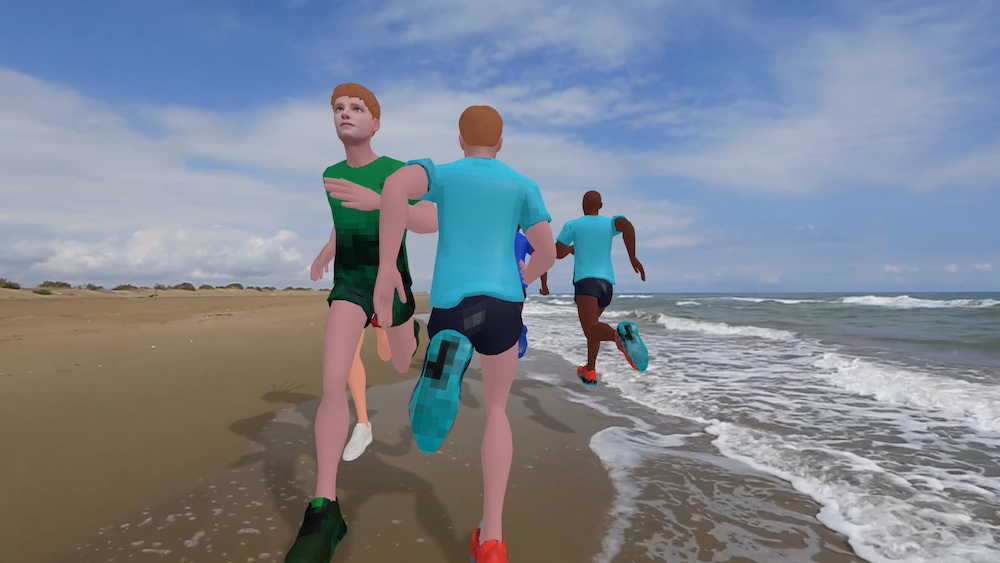
The treadmill isn't just for running; it's a platform where you can push your limits, challenge yourself, and even enjoy virtual running experiences. With AR running experiences, you can virtually run through landscapes around the world; through online social running, you can interact with runners globally, improving together. Let's open up this new world on the treadmill.
Core Content
Understanding Jack Daniels' Training System
Easy Run (E)
Purpose: Easy runs (E) are the core of base training, aimed at improving aerobic capacity and endurance. It's like taking a leisurely walk in the park, allowing you to move continuously without feeling fatigued.
Intensity: Keep your heart rate at 60%-70% of your maximum heart rate, with a pace around 70%-80% of your marathon pace.
Applicability: Suitable for beginners, during recovery periods, or as part of long-distance training.
Execution on Treadmill: Set the treadmill speed to 3-3.75 mph, maintain a relaxed pace, and enjoy your music or podcast.
Example: John, a beginner, does three easy runs a week, each for 30 minutes, helping him build running habits and improve his fitness.
Reflection Question: Have you experienced easy runs? How have they helped your training?
Marathon Pace Run (M)
Purpose: Marathon pace runs (M) simulate race conditions, enhancing endurance and speed endurance. It's like maintaining a steady pace during a marathon.
Intensity: Heart rate at 70%-80% of max, at your marathon pace.
Applicability: Ideal for marathon preparation, as part of long-distance training.
Execution on Treadmill: Set the treadmill to your marathon pace, keep a steady rhythm for 20-30 minutes.
Example: Sarah, preparing for her first marathon, does one marathon pace run weekly to adapt to race conditions.
Reflection Question: Have you tried marathon pace runs? What impact did they have on your training?
Threshold Run (T)
Purpose: Threshold runs (T) aim to increase lactate threshold and speed endurance. It's like maintaining high intensity for a set period during a race.
Intensity: Heart rate at 80%-85% of max, at your 10K race pace.
Applicability: Suitable for intermediate runners to boost race performance.
Execution on Treadmill: Set the treadmill to your 10K race pace, run for 10-20 minutes.
Example: Mike, an intermediate runner, does one threshold run weekly to improve his race times.
Reflection Question: Have you tried threshold runs? How have they helped your training?
Interval Run (I)
Purpose: Interval runs (I) are designed to enhance anaerobic capacity and speed. It's like sprinting in a short race.
Intensity: Heart rate at 85%-90% of max, at your 5K race pace.
Applicability: For advanced runners to improve speed and explosiveness.
Execution on Treadmill: Set the treadmill to your 5K race pace, do 4-6 one-minute sprints with one-minute rests in between.
Example: Jason, an advanced runner, does interval runs weekly to boost his short-distance speed.
Reflection Question: Have you tried interval runs? What effects did they have on your training?
Repetition Run (R)
Purpose: Repetition runs (R) aim to improve speed endurance and anaerobic capacity. It's like repeatedly running at high intensity during training.
Intensity: Heart rate at 90%-95% of max, at your mile race pace.
Applicability: For advanced runners to enhance speed endurance.
Execution on Treadmill: Set the treadmill to your mile race pace, do 3-5 three-minute runs with two-minute rests in between.
Example: Kevin, an advanced runner, does repetition runs weekly to improve his speed endurance.
Reflection Question: Have you tried repetition runs? How have they helped your training?
Adjusting Your Training Plan
Adjusting Based on Body Feedback
Body Feedback: This is key to adjusting your training plan. Fatigue, pain, heart rate, and breathing rate are all important indicators.
Adjustment Methods:
- Fatigue: If overly fatigued, reduce volume or intensity, increase recovery time.
- Pain: If you feel pain, stop training immediately, check for injuries.
- Heart Rate: If your heart rate is too high, lower the intensity or rest.
- Breathing: If breathing is difficult, adjust your pace or speed.
Example: Mike felt knee pain after a session, he stopped training, checked for injuries, and adjusted his plan to avoid further issues.
Reflection Question: How do you adjust your training plan based on body feedback?
Personalizing Your Training Plan
Personalization: Everyone's physical condition, goals, and training base are different, requiring a personalized plan.
Adjustment Chart:
- Beginners: 3 easy runs, 1 marathon pace run, 1 threshold run per week.
- Intermediate: 2 easy runs, 2 marathon pace runs, 1 threshold run, 1 interval run per week.
- Advanced: 1 easy run, 1 marathon pace run, 1 threshold run, 2 interval runs, 1 repetition run per week.
Example: Sarah adjusted her training plan based on her body feedback and goals, gradually increasing intensity and effectiveness.
Reflection Question: How do you personalize your training plan based on your situation?
Practical Guide
Detailed Steps for Implementation
Step One: Assess your physical condition. Check for injuries, evaluate fatigue levels.
Step Two: Set your goals. Adjust your training plan accordingly.
Step Three: Choose training types. Select appropriate training phases based on body feedback.
Step Four: Adjust volume and intensity. Modify based on body feedback.
Step Five: Record and feedback. Log your feelings and data from each session, adjust timely.
Frequently Asked Questions:
- Q: How do you know when to adjust your training plan?
- A: If you feel overly fatigued, experience pain, or have an abnormal heart rate, adjustments are needed.
- Q: How to simulate different training types on a treadmill?
- A: By setting speed, incline, and time to mimic different training phases.
Important Reminders:
- Avoid overtraining; ensure sufficient recovery time.
- Pay attention to diet and sleep to maintain your physical state.
- Regularly check treadmill safety and functionality.
Personalized Suggestions:
- Adjust your training plan based on your personal situation, not blindly following others.
- Incorporate AR running experiences for added fun.
- Join online social running for more support and motivation.
Advanced Techniques
Sharing Advanced Tips
Tip One: Heart Rate Variability Training. Adjust training intensity by monitoring heart rate variability for optimal results.
Tip Two: Altitude Training. Train at high altitudes to boost aerobic capacity.
Tip Three: Virtual Running. Use AR technology to simulate different environments and terrains, adding fun and challenge to your training.
Suggestions for Professional Users:
- Conduct regular fitness tests to assess training effectiveness.
- Combine strength training to enhance muscle strength and endurance.
- Engage in online social running for professional advice and support.
Future Trends:
- Smart treadmills will become more common, offering personalized training plans.
- AR and VR technologies will enhance running experiences further.
- Online social running will become mainstream, allowing runners to interact globally anytime.
Conclusion
Recap of Key Points
In this article, we've explored how to optimize treadmill training plans based on body feedback. By understanding Jack Daniels' training system, adjusting intensity and types of training, we can make each workout more meaningful. Whether you're a beginner or an advanced runner, personalized training plans help you find your rhythm.
Actionable Advice
- Regularly assess your physical condition and adjust your training plan accordingly.
- Incorporate AR running experiences and online social running for added enjoyment.
- Keep a log of your training sessions' feelings and data for continuous optimization.
Encouragement
Running is a journey of self-challenge and growth. No matter where you are in your running journey, believe in yourself. Each workout is a step towards improvement. Be patient, listen to your body, and enjoy the joy of running. Remember, running isn't just exercise; it's a lifestyle. Let's explore our best selves on the treadmill together!